
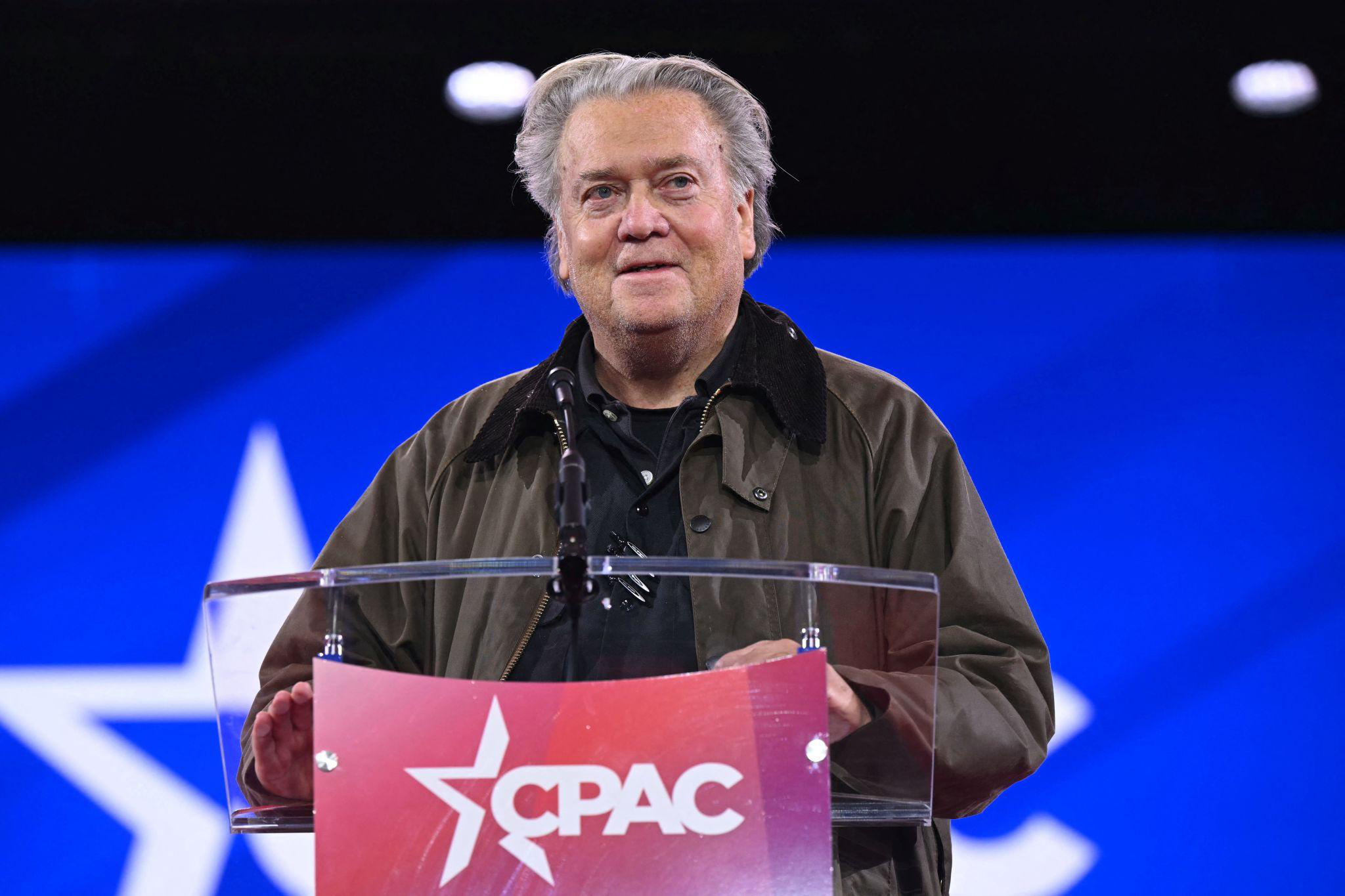
Before the 2026 midterm elections, former Trump strategist Steve Bannon warned that the Republican Party was approaching a political confrontation that could reshape its future. His prediction was not simply about losing seats in Congress. It was about a struggle for control of the party itself.
Now, with Democrats projected to take control of both the House of Representatives and the Senate, Bannon's warning has acquired new significance. The Republican Party must confront not only its electoral defeat but also growing questions about its leadership, ideological direction, and political future.
'Internal Strife Approaching'
For Bannon, a former naval officer and host of the influential War Room podcast, the language of political conflict is hardly accidental. His forecast suggests that the fiercest battle following the midterms may not be between Democrats and Republicans, but among Republicans themselves.
In an interview with the Financial Times published just days before the election, Bannon predicted an internal “civil war” within the GOP. He anticipated a confrontation between the nationalist movement that helped propel Donald Trump to power and the party's more traditional establishment.
Bannon also warned of major disputes during the congressional lame-duck session before the new Congress takes office in January. Government spending, the federal debt ceiling, defense policy, and artificial intelligence regulation were among the issues he identified as potential sources of conflict.
His concerns extend beyond legislative disagreements. They reflect a deeper struggle over who will inherit the Republican Party's leadership and define its political identity as the 2028 presidential election approaches.
Bannon has long maintained a complicated relationship with Trump, alternating between close political cooperation and public disagreement. Yet he remains one of the most recognizable voices of the nationalist movement that transformed Republican politics over the past decade.
Bannon Sees Traditionalist Onslaught
According to Bannon, influential Republican donors and establishment figures want to reclaim control of the party and restore elements of its traditional political agenda. He argues, however, that the movement has moved too far toward nationalism to return to its pre-Trump identity.
That creates a fundamental dilemma for Republicans. Should the party double down on Trump's America First agenda, or should it reconsider its political strategy after losing control of Congress?
The election results make that question increasingly difficult to avoid.
Democratic gains across the country, including a major Senate victory in Texas, have demonstrated the scale of the Republican setback. The loss of congressional control also creates new challenges for President Trump, whose administration will face stronger legislative opposition and potentially more aggressive congressional oversight.
Yet the Republican Party's internal divisions cannot be explained by electoral results alone.
It Isn't Just The Election Defeat
Disagreements over immigration, foreign policy, government spending, and America's international commitments have already exposed tensions within the conservative coalition. The midterm defeat could bring those disagreements into sharper focus.
Bannon's argument is that the Republican establishment has misunderstood the transformation of its own voters. In his view, the nationalist movement is not a temporary political phenomenon tied exclusively to Trump's personality. It represents a more lasting change in Republican political identity.
That interpretation is far from universally accepted within the GOP. Traditional conservatives, institutional Republicans, and different factions of the MAGA movement continue to disagree over the party's priorities and its future leadership.
2028 Plans
The approaching 2028 presidential contest adds another dimension to the struggle. With Trump constitutionally barred from seeking a third term as president, Republicans must eventually decide who can carry the party forward and whether the next generation of leadership will preserve or redefine his political legacy.
Ironically, Republicans spent much of the midterm campaign warning voters about the consequences of a Democratic victory. Now, the more immediate political confrontation may unfold within their own ranks.
Whether Bannon's prediction of an internal civil war proves accurate remains uncertain. Political parties often experience fierce disagreements after major electoral defeats, and those disputes do not necessarily result in permanent divisions.
But one conclusion is difficult to escape: the battle over the Republican Party's future has entered a new phase.
The ballots have been counted in many of the decisive races. The struggle over what comes next is only beginning.