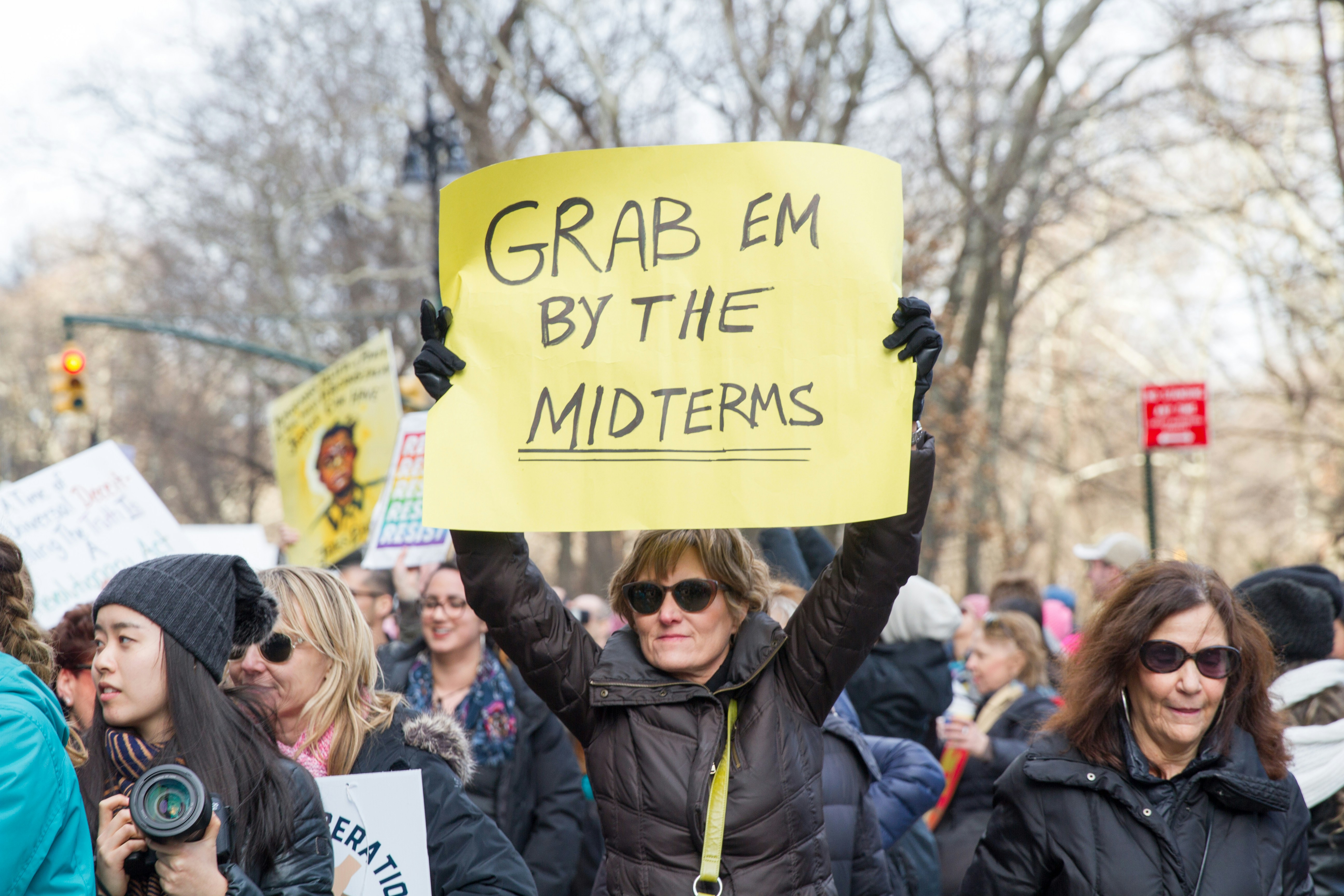

The November 3 midterm elections have once again opened a door of opportunity for Democrats. Their sweeping victories, which delivered control of both the House and Senate, represent a remarkable political comeback for a party still recovering from the disarray that followed the 2024 presidential election.
Few would have predicted such a decisive blue wave based on the party's performance in the months leading up to Election Day. Yet the results suggest that Democrats have been given precisely the political opportunity they needed.
Their success also echoes the 2018 midterm elections during President Donald Trump's first term, when Democrats regained control of the House of Representatives. The pattern is familiar: voters dissatisfied with a Republican administration turn to Democrats as an alternative.
But winning elections has never been the party's only challenge. Sustaining momentum after those victories has often proved far more difficult.
'It is a lease, not a mortgage'
History offers a cautionary lesson. Both Bill Clinton and Barack Obama entered the White House with considerable public enthusiasm, only to see their parties suffer significant congressional setbacks during their presidencies. Those losses weakened their governing agendas and exposed the difficulty of transforming electoral enthusiasm into lasting political support.
The question facing Democrats today is whether they can finally break that cycle.
That challenge was captured in a recent episode of the Pivot podcast, featuring former Secretary of State and 2016 Democratic presidential nominee Hillary Clinton.
Before the election results were known, Clinton predicted:
"I think we are going to wake up to a Democratic House and a Democratic Senate."
Co-host Scott Galloway offered a particularly memorable warning:
"I would argue it's a lease, not a mortgage; dating, not a relationship."
His observation goes directly to the heart of the Democratic dilemma.
A midterm victory does not necessarily represent permanent voter loyalty. It may simply reflect public dissatisfaction with the party currently in power. Democrats should therefore regard their success not as an unconditional mandate, but as an opportunity to earn the confidence of voters who may still be skeptical of both parties.
Clear Agenda and Discipline
Clinton made a similar argument, warning that Democrats risk losing their newly acquired support unless they enter Congress with a clear agenda and the discipline to deliver results.
That warning deserves serious attention.
If Democrats hope to build on their victories and compete successfully in the 2028 presidential election, they must begin by listening more carefully to the American public.
The priorities are neither complicated nor mysterious.
Affordability, government accountability, corruption, and oversight of the Department of Government Efficiency offer important areas for a substantive political agenda. Rising living costs, declining confidence in institutions, and frustration with Washington have become defining concerns for many Americans.
These issues cannot be addressed through campaign slogans alone. Voters will expect meaningful proposals, legislative action, and measurable results.
Another encouraging development for Democrats was the involvement of prominent former party leaders during the campaign. Barack Obama, Bill and Hillary Clinton, and other established Democratic figures helped reinforce the party's message and mobilize supporters.
Their participation illustrated the value of political experience and institutional continuity.
The contrast with today's Republican Party is striking.
Donald Trump has transformed much of the Republican Party into a political movement closely associated with his personal leadership. Although that approach has generated extraordinary loyalty among his supporters, it has also raised questions about the party's identity beyond Trump.
Traditional Republican figures, including former President George W. Bush, have played comparatively limited roles in shaping the party's current political direction. The question of what comes after Trump remains an important challenge for Republicans.
Voters Desire Real Change
Meanwhile, the American public appears increasingly exhausted by the intensity and unpredictability of national politics.
The midterm results suggest that many voters are looking for something different. Economic anxiety, political confrontation, and dissatisfaction with the direction of the country have created an opening for Democrats.
But an opening is not the same as a lasting political realignment.
Barack Obama's enduring political appeal offers another lesson worth remembering.
His success was not based solely on policy proposals. It was also built around hope, optimism, and the belief that Americans could work toward a common purpose.
His famous slogan, "Yes We Can," represented more than an election campaign. It offered a vision of political participation and collective possibility.
Democrats need to rediscover that spirit.
Winning control of Congress is a significant achievement, but it is not enough. The party must now demonstrate that it can govern responsibly, address economic concerns, restore public confidence, and offer a compelling vision for the country's future.
The road to 2028 will not be determined by the celebrations of November 2026. It will be shaped by what Democrats accomplish in the months and years ahead.
The midterms have given Democrats something political parties rarely receive without considerable effort: another chance to prove themselves.
Whether they turn that opportunity into lasting success will depend on their ability to learn from previous mistakes rather than repeat them.
The wake-up call has been delivered. Democrats should make sure they do not hit the snooze button.