
N-EXTENT | News Desk
AUSTIN — For decades, the Bush family has represented the political establishment of the Republican Party in Texas. Two presidents, a governor, and generations of political influence has helped transform the state into one of America's most reliable Republican strongholds.
Today, however, members of that same family are supporting a Democratic candidate in one of the country's most closely watched Senate races.
With the November midterm elections approaching, their decisions raise an uncomfortable question for Republicans: Is this simply a disagreement over one controversial candidate, or evidence of a deeper transformation within the party?
When the Bush Name Crosses Party Lines
Neil Bush, the brother of former President George W. Bush and son of former President George H.W. Bush, announced that he had voted for Democratic Senate candidate James Talarico rather than Republican Ken Paxton.
His explanation went beyond ordinary partisan disagreement.
Neil Bush criticized Paxton's record as Texas attorney general, particularly his efforts to challenge the results of the 2020 presidential election. He also expressed concern about Donald Trump's influence on the Republican Party.
Bush emphasized that he still believed in traditional Republican principles but considered political character more important than party loyalty.
His decision was not an isolated development.
Barbara Pierce Bush, daughter of former President George W. Bush, contributed $2,500 to Lone Star Rising PAC, an organization supporting Talarico.
The amount itself is relatively modest in a Senate race attracting extraordinary financial resources. Its symbolic significance, however, is considerably greater.
Barbara Bush has previously supported Democratic candidates, including Kamala Harris in 2024. Nevertheless, her financial support for a Democrat in Texas adds another dimension to the family's complicated relationship with today's Republican Party.
The Republican Party the Bushes Helped Build
To understand the significance of these developments, it is necessary to examine the political history of Texas.
George W. Bush's victory over Democratic Governor Ann Richards in 1994 helped accelerate the Republican transformation of the state.
The Bush family became associated with a Republican establishment emphasizing economic conservatism, international engagement, institutional stability, and traditional political leadership.
Donald Trump's political movement introduced a different approach.
Populist rhetoric, confrontation with established institutions, and personal loyalty became increasingly prominent features of Republican politics.
For many Trump supporters, this transformation represented a necessary rejection of an ineffective political establishment.
For some traditional Republicans, however, it raised questions about the party's direction.
The tension became particularly visible in 2022, when George P. Bush, another member of the political dynasty, unsuccessfully challenged Ken Paxton in the Republican primary for Texas attorney general.
Is This About Trump or Ken Paxton?
The distinction matters.
Neil Bush's support for Talarico reflects criticism of both Paxton's political record and Trump's influence.
Paxton has faced several controversies during his political career, including his impeachment by the Republican-controlled Texas House in 2023. The Texas Senate subsequently acquitted him.
His supporters, meanwhile, view him as a committed conservative willing to confront political opponents and challenge established institutions.
Trump's endorsement has strengthened Paxton's standing among Republicans who identify with the president's political movement.
Talarico presents a contrasting political profile, emphasizing faith, affordability, political accountability, and cooperation across partisan divisions.
The Bush family's recent decisions therefore highlight competing definitions of Republican identity, rather than proving a broad ideological conversion to Democratic politics.
Could Texas Be Entering a Political Realignment?
Texas has not elected a Democrat to the United States Senate since 1988.
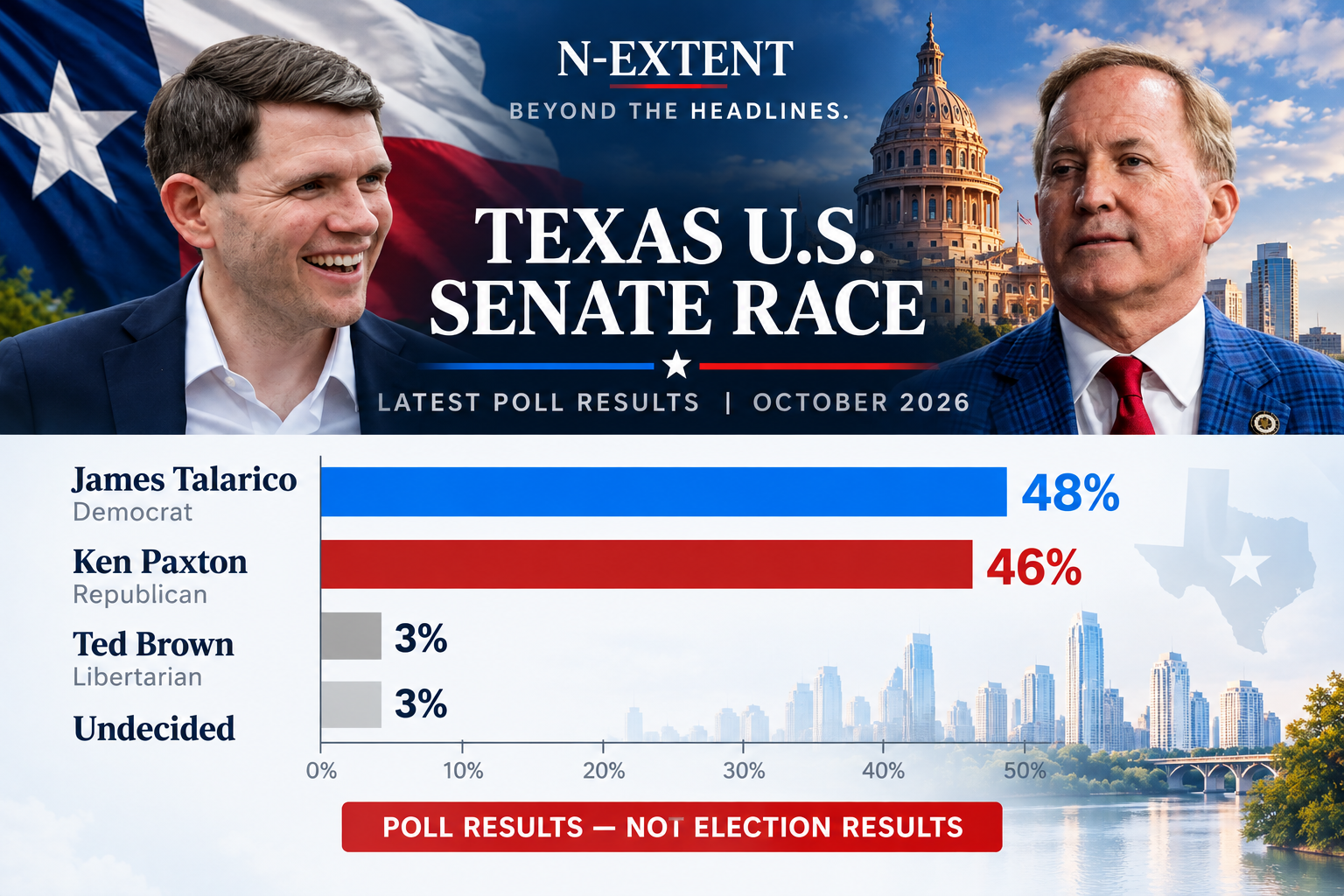
Yet the contest between Paxton and Talarico has become unexpectedly competitive, attracting national attention and substantial campaign spending.
Recent polling suggests a close race, although the outcome remains uncertain.
The support of prominent Republicans could carry symbolic weight, particularly among voters uncomfortable with the direction of their party.
But two members of a political family cannot establish a statewide electoral trend.
Nor should their decisions be interpreted as an endorsement by the entire Bush family. Former President George W. Bush has not publicly endorsed Talarico.
The larger question is whether these individual decisions reflect a meaningful political movement or remain isolated expressions of dissatisfaction.
A Political Dynasty Confronts a Different Republican Party
The Bush family's political legacy remains deeply connected to the rise of Republican dominance in Texas.
But political parties evolve, sometimes in directions their former leaders never anticipated.
The current Senate contest offers a revealing example of that evolution.
For Trump-aligned Republicans, the party's transformation represents a successful break from the political establishment.
For critics within the traditional Republican movement, it represents a departure from principles they once considered fundamental.
Whether these disagreements will influence the election remains to be seen.
But one question extends well beyond Texas:
Are members of the Bush family abandoning the Republican Party, or has the Republican Party moved away from the political identity the Bush family once helped define?
N-EXTENT — Beyond the Headlines
Editorial note: This article is political analysis, not an endorsement of either candidate. Reporting is based on statements and campaign finance information available as of October 26, 2026.