N-EXTENT | News Desk
BERLIN — NVIDIA Chief Executive Officer Jensen Huang has brushed off market jitters surrounding the multi-billion-dollar artificial intelligence buildout, arguing that unprecedented global demand for compute power will resolve lingering concerns over data center financing, deployment delays, and infrastructure physical bottlenecks.
Speaking on the sidelines of the GTC conference in Berlin on 21 October, Huang addressed recent market volatility and growing investor anxiety regarding "neocloud" infrastructure providers and capital expenditure efficiency. Rather than viewing the vast sums required to stand up AI factories as a structural risk, Huang maintained that elevated demand for tokens across both open-source and proprietary models ensures the market will adjust.
"The single problem that nothing can solve is demand," Huang said during an interview hosted by Deirdre Bosa. "With demand, everything will be resolvable."
Addressing Capital Idle Time
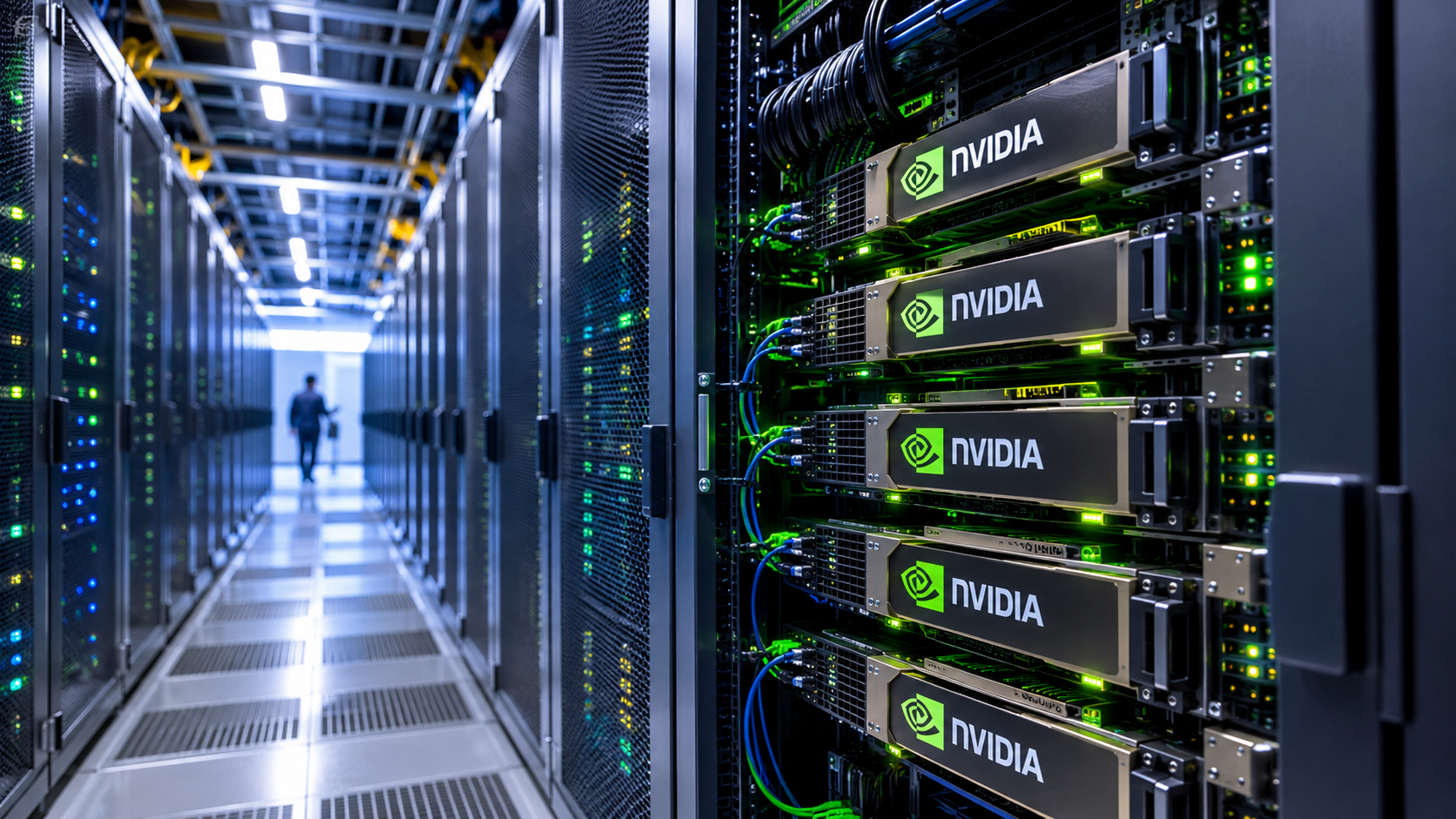
To mitigate one of the market's primary friction points—the months-long gap between equipment shipment and revenue generation—NVIDIA unveiled its new DSX Pod platform. Designed as a modular, containerized AI factory unit, the system aims to pre-assemble and pre-test high-density infrastructure before it arrives at data center sites.
Huang noted that a single gigawatt data center can represent up to $50 billion in capital outlay. Because traditional installations often take four to six months to wire, boot, and operationalize, billions in capital sit idle during setup. Huang said modular pre-fabrication can shave months off that timeline, directly reducing financial float for lenders and cloud partners while accelerating time-to-revenue.
Huang also argued that traditional financial markets underappreciate the long-term asset value of graphics processing units (GPUs). Driven by continuous software optimization via NVIDIA’s CUDA platform, hardware life cycles—such as the Blackwell architecture and the upcoming Vera Rubin generation—are extending up to seven or eight years. He suggested that because NVIDIA compute is durable, productive, and fungible, the hardware itself can increasingly serve as low-risk collateral to backstop debt underwriting.
Physical Bottlenecks and Global Competition
Addressing physical constraints—including grid connection delays, land access, and power generation—Huang acknowledged that infrastructure limitations remain real. However, he emphasized that NVIDIA’s broad customer base spanning hyperscalers, sovereign governments, enterprise labs, and neoclouds such Nebius, Coreweave and Nscale provides operational resilience. When regional permitting or power delays stall one site, hardware shipments can instantly be redirected to ready locations elsewhere.
On global dynamics, Huang urged Western tech firms and policymakers to take competition from China seriously, highlighting the nation's capacity to scale hardware manufacturing, open models, and engineering talent.
Closing out his remarks, Huang dismissed fears that the AI boom would trigger widespread job losses, pointing instead to labor expansion across energy production, specialized software, healthcare, and physical re-industrialization.
"We're really going into the inflection point of useful AI as we speak," Huang said. "People are using it to do more useful things, and that's the reason why token demand is so high."
N-EXTENT — Beyond the Headlines