
A $5,000 Promise With Political Conditions
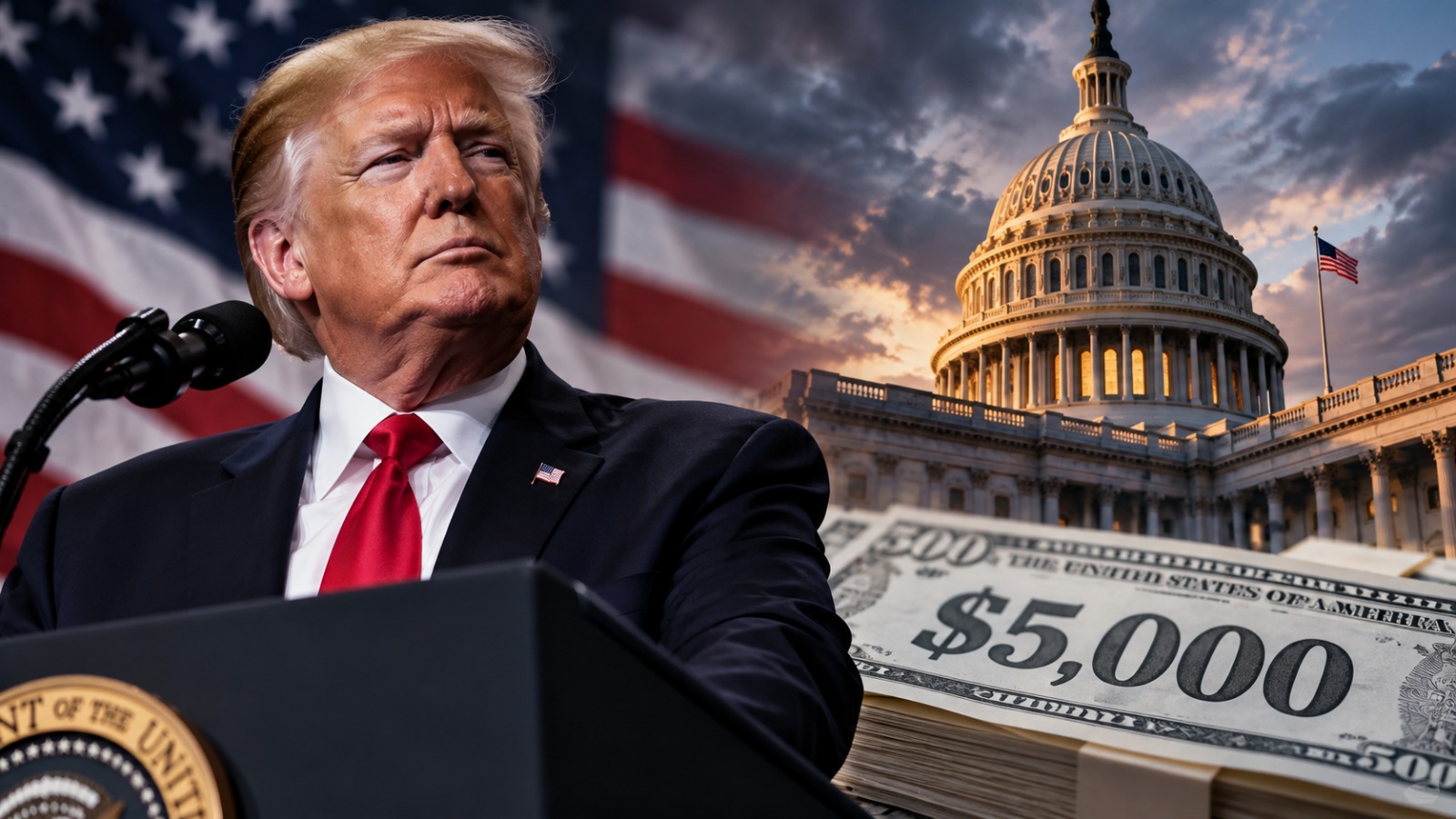
At the Republican National Committee's September convention in Dallas, President Donald Trump announced a proposal he called the Trump Dividend: a one-time payment of $5,000 to American adults if Republicans retain control of both the House of Representatives and the Senate in the November 3 midterm elections.
The announcement came as Republicans prepared to defend their congressional majorities amid concerns about the economy, the cost of living, and the administration's foreign policy.
Trump has suggested that tariff revenues could help finance the payments. Yet the proposal remains a political promise rather than an approved government program.
The central controversy is not simply the amount being offered, but the condition attached to it: the proposed benefit depends on the electoral success of the president's party.
The Financial and Legal Obstacles
The proposal carries an estimated price tag of approximately $1.2 trillion, making it one of the largest direct-payment initiatives ever suggested by a U.S. president.
Trump has argued that revenue from tariffs could support the program. However, current tariff collections fall far short of the amount required, raising questions about additional borrowing, the federal deficit, and potential inflationary effects.
There is also a constitutional obstacle. Federal spending generally requires congressional authorization. Although Trump initially suggested that he could distribute the payments without legislative approval, House Speaker Mike Johnson subsequently stated that Congress would need to authorize the program.
No legislation establishing the proposed dividend has been enacted, and no payment schedule has been announced.
Where Campaign Promises Meet Electoral Influence
Governments routinely offer tax relief, financial assistance, and economic incentives. Political parties also campaign on promises to improve household finances.
What makes Trump's proposal unusual is its explicit connection to the outcome of an election.
Supporters regard the dividend as a potential way to share economic gains with American households. Critics question whether a publicly funded benefit should be conditioned on a political party's victory.
In an October 6 analysis published by Just Security, legal scholars Bruce Swartz, Harry Seavey, and Cara Barazia examined whether the proposal could raise concerns under federal laws prohibiting vote buying and voter coercion.
Their analysis presents one legal interpretation, not a judicial finding. Other legal experts have argued that broadly applicable campaign promises are generally protected political speech rather than unlawful vote buying.
The distinction between a legitimate policy proposal and an improper electoral inducement therefore remains central to the debate.
A Lesson From Switzerland
The idea of providing direct payments to citizens has been tested in other democracies.
In June 2016, Swiss voters considered a proposal to establish an unconditional basic income. Supporters suggested monthly payments of 2,500 Swiss francs for adults, although the proposed constitutional amendment did not specify a fixed amount.
The initiative was rejected by 76.9% of voters.
The Swiss proposal differed significantly from Trump's plan: it envisioned a permanent basic income rather than a one-time payment linked to an election outcome.
Nevertheless, the referendum illustrates that the prospect of receiving money does not necessarily guarantee public support. Questions about affordability, economic consequences, and the role of government can also shape voters' decisions.
More Than an Election Promise
The November 3 elections will determine whether Republicans maintain control of Congress or Democrats gain a majority in one or both chambers.
The outcome will shape the legislative environment for the remaining two years of Trump's presidency, influencing federal spending, congressional oversight, and the administration's policy agenda.
Whether the proposed $5,000 dividend will significantly affect voter behavior remains uncertain.
But the controversy has already raised a broader question about American democracy:
Should a publicly funded economic benefit ever be made conditional on the electoral success of a political party?
The answer may prove more consequential than the promise itself.