N-EXTENT | News Desk
CAGLIARI — From the hills of Sardinia to the shores of Okinawa, some communities seem to have discovered something the rest of the world is still searching for: how to live longer without making life a constant exercise in staying healthy.
There is something rather appealing about the idea of living to 100. Not necessarily the number itself, but the prospect of reaching old age with enough energy to enjoy it. Still able to walk around, meet friends, prepare a meal, laugh at a good story and, perhaps most importantly, have a reason to get up in the morning.
For most of us, the pursuit of a longer life tends to involve a familiar collection of advice: eat better, exercise more, sleep properly, avoid stress and remember to drink enough water. We know the drill. The difficulty, as always, is putting it into practice.
But what if the secret to a long and healthy life has less to do with following a strict routine and more to do with the way we organize our everyday lives?
That is where the Blue Zones come in.
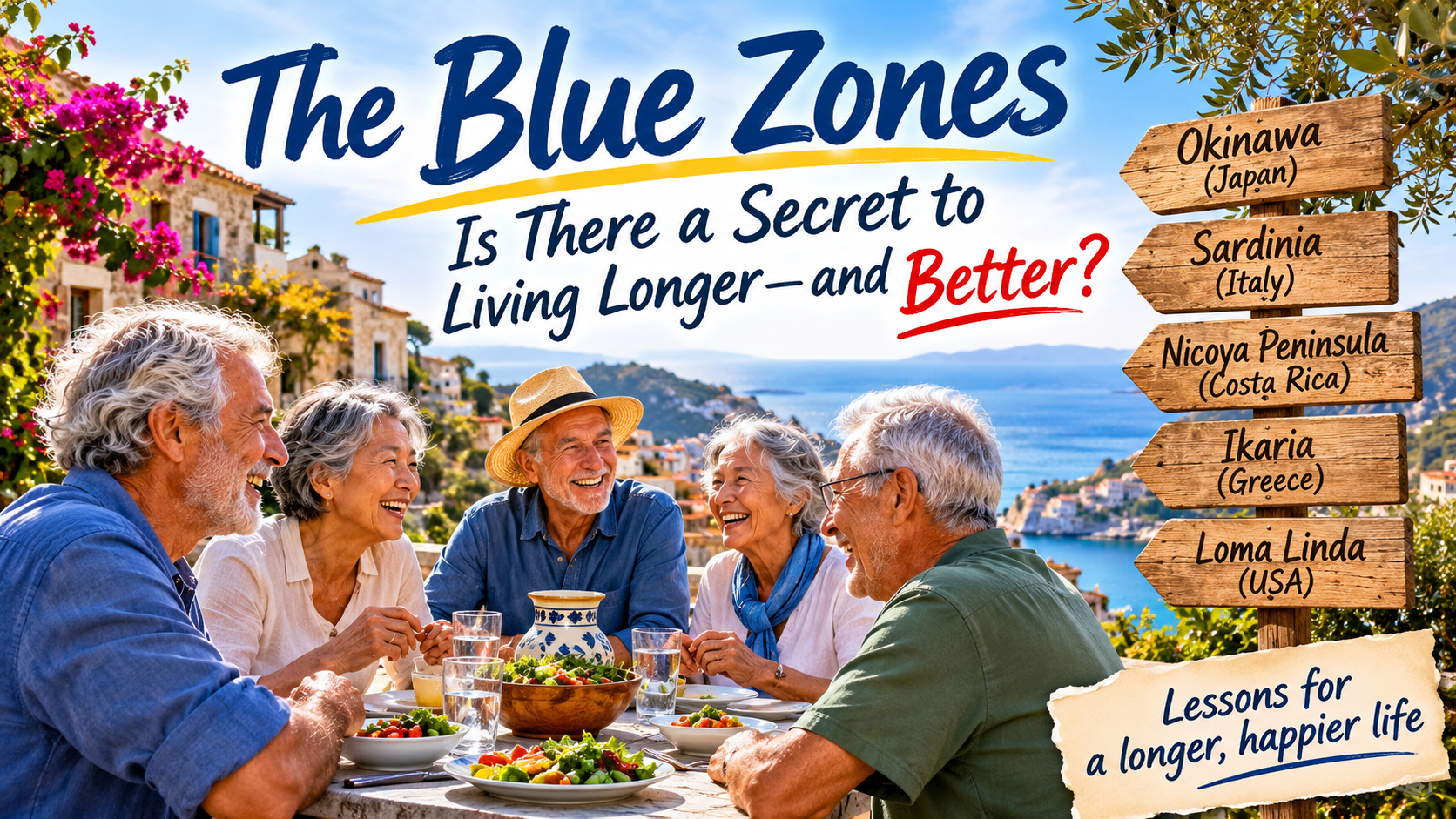
The term refers to places where unusually high numbers of people have reached the age of 100, often remaining active and relatively healthy well into old age. The concept was popularized by researcher and author Dan Buettner, who brought attention to five communities: Okinawa in Japan, Sardinia in Italy, Ikaria in Greece, the Nicoya Peninsula in Costa Rica and Loma Linda in California.
They are hardly alike in geography, culture or climate. Some are islands, others are rural communities, and one is a small Californian city with a large Seventh-day Adventist population. Yet researchers and observers have identified a number of striking similarities in how people live.
And perhaps the most interesting part is that none of them seems particularly complicated.
The Art of Not Trying Too Hard
Take physical activity. In many Blue Zone communities, people do not necessarily spend their mornings in gyms or organize their lives around workout schedules. Instead, movement is simply part of the day.
They walk to the shops, tend gardens, work outdoors, cook, look after their homes and visit neighbors. In Sardinia, for example, the mountainous landscape and traditional way of life have historically meant plenty of walking. In Okinawa, everyday routines have traditionally kept people on their feet and engaged with their surroundings.
It is a rather different approach to exercise. Instead of treating physical activity as another item on an already crowded to-do list, it becomes something that happens naturally.
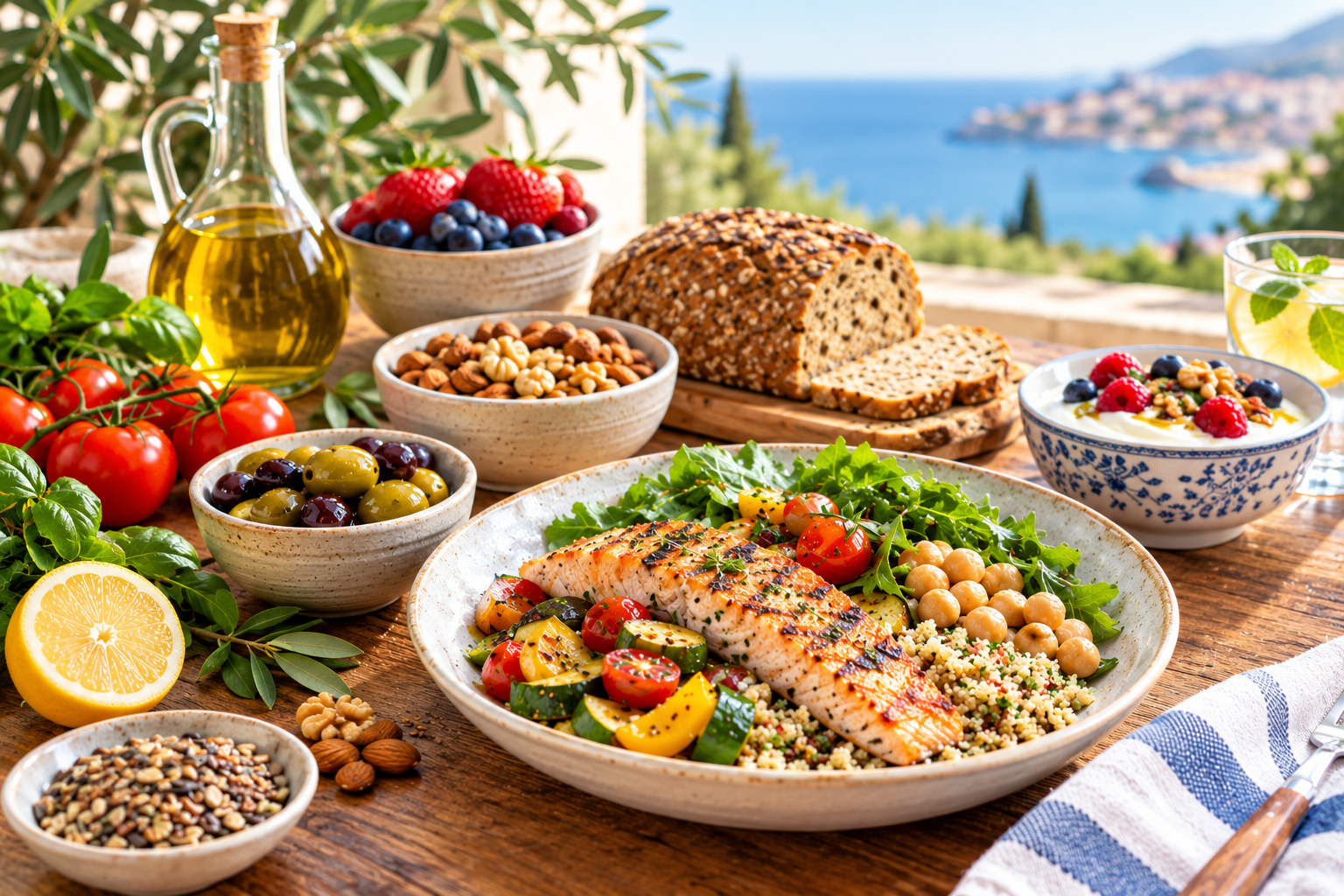
Food follows a similarly uncomplicated pattern. The traditional diets of these communities vary, but they tend to rely heavily on vegetables, beans, whole grains, nuts and other plant-based foods. Meat generally plays a smaller role, while highly processed food is less central to traditional eating habits.
There is also a cultural preference for moderation. The Okinawan expression hara hachi bu, for instance, encourages people to stop eating when they feel about 80 per cent full. It is a simple reminder that finishing everything on the plate is not necessarily a measure of success.
None of this sounds particularly revolutionary. Perhaps that is precisely the point.
Good Company Is Critical
If there is one lesson from the Blue Zones that deserves more attention, it may have little to do with food or exercise.
It is the importance of other people.
In Okinawa, the tradition of moai brings together groups of friends who support one another throughout life. In Sardinia and Ikaria, family ties and community relationships have traditionally remained an important part of everyday life. In Loma Linda, religious and social networks provide a strong sense of belonging.
Loneliness, by contrast, is increasingly recognized as a serious public health concern. Human beings are social creatures, and the quality of our relationships can influence our emotional well-being as well as our physical health.
There is something reassuring about the thought that a regular lunch with friends, a conversation with a neighbor or simply being part of a community might matter as much as some of the more fashionable health routines.
Then there is the question of purpose.
In Okinawa, the word ikigai is often used to describe a reason for living or something that gives life meaning. In Nicoya, the idea of plan de vida expresses a similar sense of purpose. It does not have to be an ambitious career, a grand personal mission or a particularly philosophical pursuit. It can be family, gardening, helping others or looking forward to seeing someone tomorrow.
A sense of purpose does not guarantee a long life, of course. But having something to look forward to makes the everyday business of living rather more enjoyable.
The Secret May Be That There Is No Secret
It would be tempting to turn the Blue Zones into a universal formula: eat these foods, walk this many kilometers per day, maintain this number of friendships and live to 100. Unfortunately, life is not quite so cooperative.
Genetics, income, healthcare, environment and chance all play their part. Researchers have also debated the reliability of some historical age records and the extent to which the Blue Zone model can be applied elsewhere. The scientific evidence is not equally strong for every location, and the communities themselves are changing as traditional lifestyles give way to modern habits.
Harvard Health, for example, notes that the broader Blue Zone theory is not definitive science, even though many of the behaviors associated with these communities are consistent with established research on healthy aging. A 2025 scientific review likewise found that the evidence varies between regions.
That distinction is worth keeping in mind. The Blue Zones are not a promise of immortality, nor are they an invitation to abandon modern medicine in favor of a Mediterranean village and a vegetable garden.
But they do offer an interesting perspective on what we sometimes overlook when discussing health. We tend to focus on individual decisions: what to eat, how often to exercise, which supplements to take and how many hours to sleep. The Blue Zones suggest that the environment around us may be just as important. When walking, cooking, spending time with friends and staying connected to family are simply part of everyday life, healthy choices become less of a struggle.
Perhaps that is the real attraction of these places. Their inhabitants have not necessarily discovered a secret that the rest of us need to spend money to learn. They have, in many cases, preserved ways of living that modern societies have gradually pushed aside.
And maybe we could all borrow a little of that wisdom.
Go for a walk without turning it into a fitness challenge. Invite someone over for dinner. Eat a little more slowly. Spend time outdoors. Call an old friend. Find something that gives the day a purpose beyond getting through it.
None of these things will guarantee that we reach 100. But they might make the years we have considerably better.
After all, the point of a long life is not simply to have more birthdays. It is to have more good days worth remembering.
N-EXTENT — Beyond the Headlines