N-EXTENT | News Desk
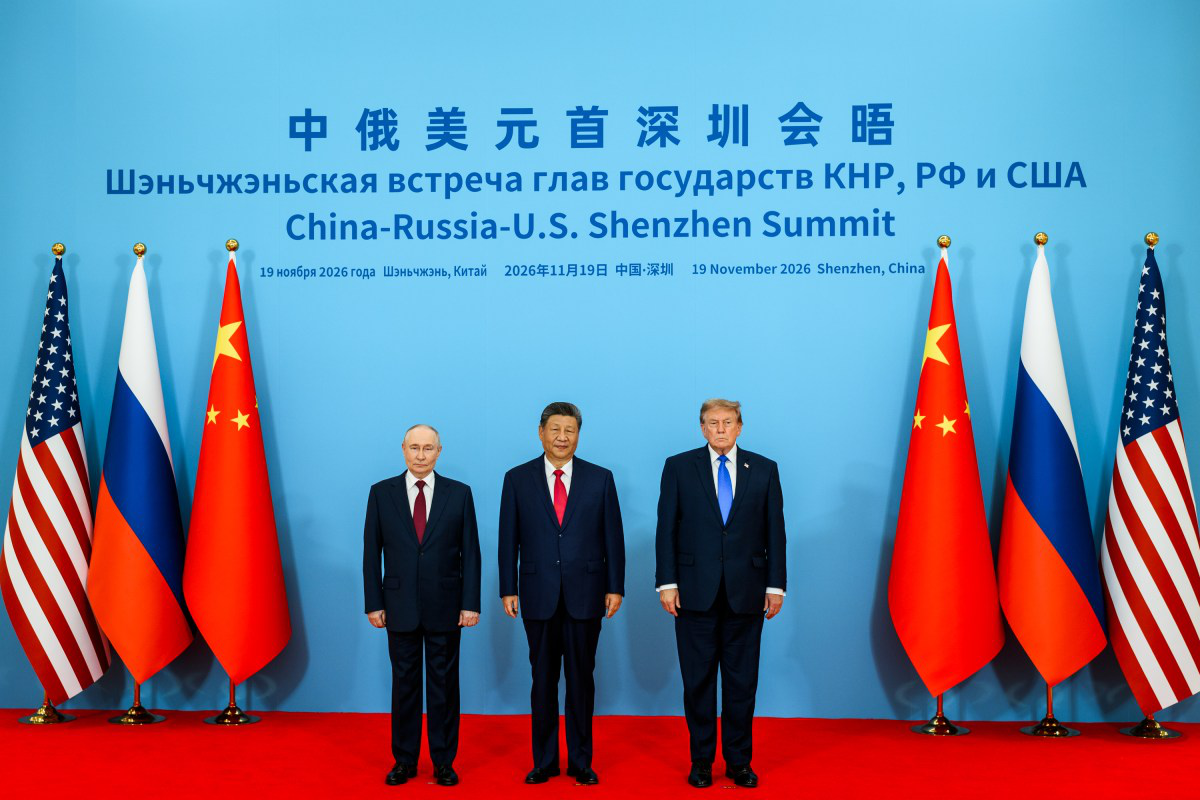
SHENZEN — The image of Donald Trump, Vladimir Putin, and Xi Jinping taken together before a larger leaders' summit in China preceding the first-of-its-kind trilateral meeting of the US, China and Russia presidents may become one of the defining photographs of contemporary international politics.
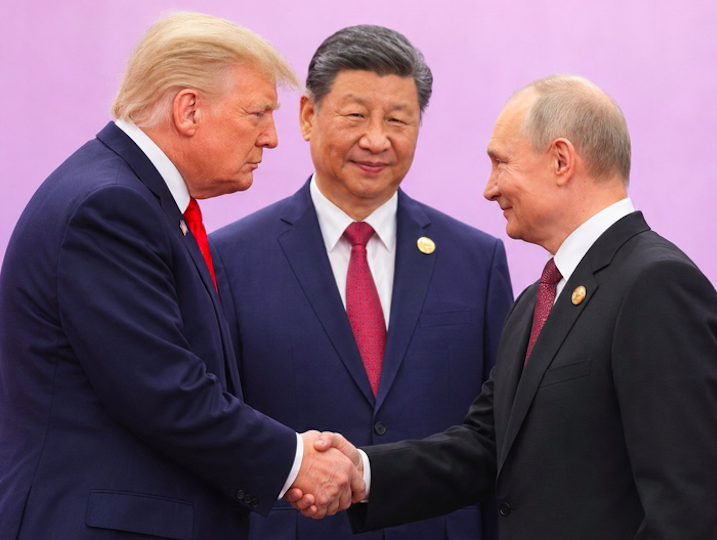
The three leaders have already exchanged greetings in Shenzhen, with Trump and Putin shaking hands in the presence of their Chinese host. Xi's decision to break with diplomatic precedent and personally welcome Trump at the airport also speaks volumes about the importance Beijing attaches to the relationship with Washington — and the effort Xi is making to court his American counterpart. But beyond the diplomatic ceremonies lies a more important question: Is Washington still setting the global agenda, or is a new balance of power beginning to emerge?
For decades, the United States has occupied the central position in global diplomacy. American presidents hosted major summits, shaped international agreements, and exercised considerable influence over relations among competing powers.
Today, the picture looks different.
Trump has traveled to China, where Xi Jinping is hosting two leaders whose countries maintain one of the world's most consequential strategic relationships.
The symbolism is difficult to ignore.
Xi Jinping: The Man Who Brought Everyone Together
China may already have secured an important diplomatic victory.
By bringing the American and Russian presidents onto Chinese soil, Xi has demonstrated Beijing's growing importance in international affairs.
China is simultaneously an economic competitor of the United States and a strategic partner of Russia. Beijing has managed to preserve both relationships despite growing geopolitical tensions.
That flexibility provides Xi with considerable leverage.
China benefits from Russian energy resources and strategic cooperation, while its economic relationship with the United States remains essential. Xi has little reason to abandon either connection.
His greatest achievement may be demonstrating that Washington and Moscow both recognize China's importance in shaping future international arrangements.
Yet hosting a summit does not automatically make China its winner. Beijing must still manage significant economic pressures, security concerns, and its complicated relationship with Washington.
Putin: Diplomatic Recognition Without Concessions?
For Vladimir Putin, the encounter offers something Russia has sought throughout its confrontation with Western governments: recognition as an indispensable global power.
Despite the war in Ukraine, Western sanctions, and diplomatic isolation from much of Europe, Putin is once again sharing the international stage with the American president.
That alone carries political significance.
The question is whether this visibility will translate into substantive gains.
Moscow wants greater influence over discussions concerning Ukraine, European security, and the international sanctions imposed on Russia.
Trump, meanwhile, faces the challenge of engaging Putin without creating the impression that Washington is negotiating Europe's security over the heads of its allies.
A meeting can reopen diplomatic channels. It cannot, by itself, resolve the fundamental disagreements that have prolonged the Ukraine conflict.
Trump's Biggest Gamble
Trump's foreign policy has consistently emphasized direct engagement and personal diplomacy.
His supporters believe that speaking directly with America's competitors can break diplomatic deadlocks, reduce tensions, and create opportunities for agreements.
His critics argue that high-profile meetings can reward authoritarian leaders with international legitimacy without necessarily producing meaningful concessions.
Both perspectives deserve examination.
Trump may be attempting something strategically ambitious: improving relations with Russia while simultaneously managing competition with China.
If Washington can exploit differences between Beijing and Moscow, it could reduce the pressure created by their strategic partnership.
But the opposite outcome is also possible.
China and Russia may emerge from these discussions more confident in their ability to influence Washington's decisions.
The outcome will depend less on Trump's personal chemistry with the other leaders than on the commitments each government is willing to make.
A New World Order or Simply a New Diplomatic Stage?
The Shenzhen encounter highlights an evolving reality.
The United States remains an enormously powerful military, economic, and diplomatic actor. Neither China nor Russia can simply replace Washington's global influence.
Yet America no longer operates in an international environment where its preferences automatically determine the outcome of every major negotiation.
China possesses substantial economic leverage. Russia retains significant military capabilities and influence over international security.
Both countries recognize the advantages of cooperation, even when their interests diverge.
Trump's challenge is to demonstrate that American leadership can remain effective in this increasingly competitive environment.
The real measure of success will be whether the negotiations produce concrete progress on nuclear security, Ukraine, economic stability, or relations among the three powers.
Who Really Won?
It is too early to identify a definitive winner.
Trump has gained an opportunity to pursue major diplomatic agreements. Putin has received international visibility. Xi has reinforced China's position as a central player in global diplomacy.
But photographs are not agreements, and diplomatic recognition is not the same as strategic success.
The central question emerging from Shenzhen is no longer simply whether Trump can negotiate with Putin and Xi. It is whether America can maintain its leadership in a world where its two greatest strategic competitors increasingly have a seat at the same table.
And perhaps the most revealing detail is this:
Trump came to China hoping to demonstrate American power. Xi may have already demonstrated China's growing influence simply by bringing everyone together.
N-EXTENT — Beyond the Headlines