

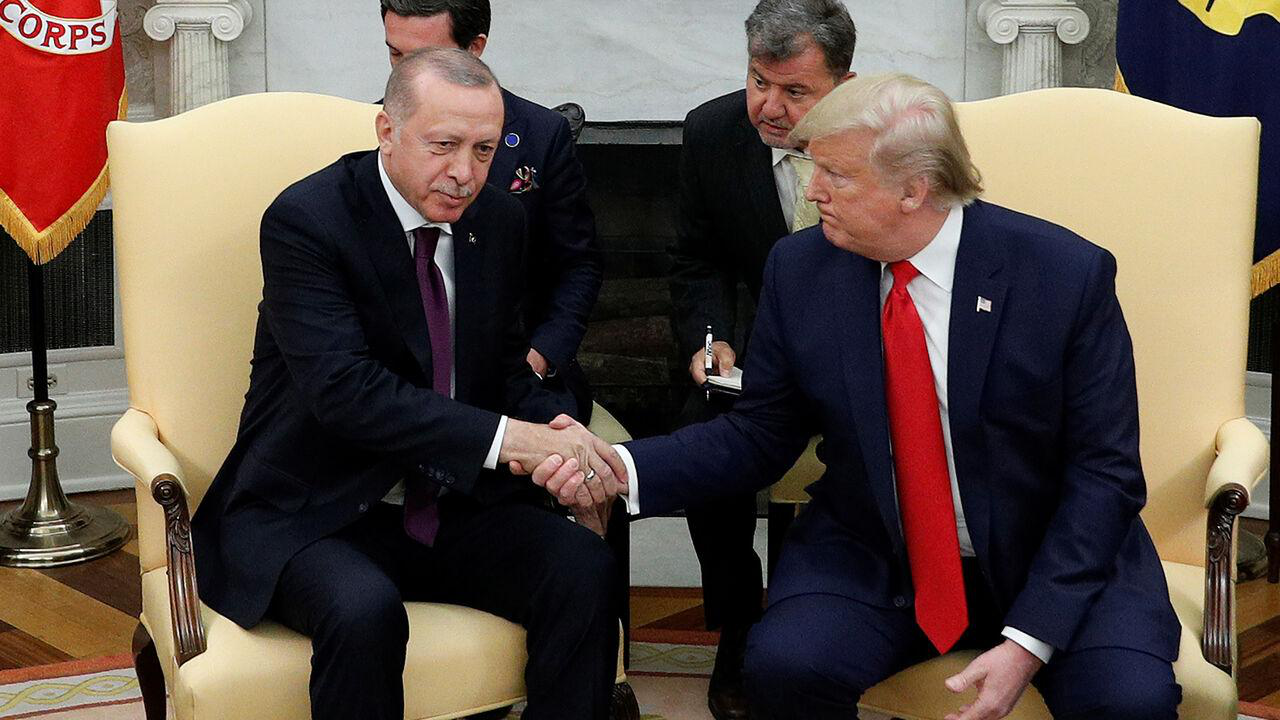
The political earthquake that swept across America on November 3 may have consequences far beyond Washington. One foreign leader with particular reason to examine the results is Turkish President Recep Tayyip Erdogan.
Democrats have won control of both the House of Representatives and the Senate, delivering a major political setback to President Donald Trump. Their victories, including James Talarico's historic Senate win in Texas, have fundamentally altered Washington's political landscape.
For Erdogan, the implications could be significant.
A Friendship Facing a New Reality
For years, Erdogan has relied heavily on personal diplomacy, cultivating direct relationships with influential world leaders. His relationship to Trump has been particularly valuable in managing disagreements between Ankara and Washington.
Despite tensions over Russian weapons systems, Syria, and regional security, Trump has repeatedly emphasized his positive relationship with the Turkish president.
That personal connection has offered Erdogan an important diplomatic advantage: the possibility of resolving difficult disputes directly through the White House.
But American foreign policy is not controlled by the president alone.
Beginning in January 2027, Democrats will control both chambers of Congress, gaining greater authority over legislative priorities, congressional investigations, and oversight of the administration.
Trump will remain president, but his political freedom to maneuver will face new constraints.
Defense, Sanctions and Human Rights
The most immediate challenges could emerge in defense cooperation.
Turkey's purchase of Russia's S-400 missile defense system has led to its removal from the American F-35 fighter jet program and triggered U.S. sanctions.
Although Trump has expressed interest in improving defense relations, Congress retains considerable influence over military sales and sanctions legislation.
Democratic lawmakers could demand stronger conditions before supporting concessions to Ankara. However, opposition to Turkey's Russian weapons purchases has historically crossed party lines.
Human rights represent another potential source of friction.
Democratic lawmakers have frequently criticized Turkey over judicial independence, press freedom, and the treatment of political opponents.
With congressional committees under Democratic leadership, these issues could receive renewed attention through hearings, investigations, and legislative proposals.
For Erdogan, this could complicate efforts to separate strategic cooperation from disagreements over Turkey's domestic politics.
Syria and the Strategic Importance of Turkey
Syria remains another sensitive issue.
American cooperation with Kurdish-led forces in Syria has repeatedly created tensions with Ankara, which considers certain Kurdish organizations a national security threat.
A Democratic-controlled Congress could increase scrutiny of American policy in the region, although disagreements over Syria exist within both parties.
Nevertheless, Turkey remains an important NATO ally, strategically positioned between Europe, the Middle East, and the Black Sea.
Washington cannot easily disregard Ankara's role in regional security, energy routes, and diplomatic negotiations.
That strategic importance gives Erdogan room to negotiate, regardless of which party controls Congress.
Is Trump's Friendship Still Enough?
The broader question extends beyond individual policy disagreements.
For foreign leaders who have invested heavily in personal relationships with Trump, the Democratic victory presents a new diplomatic challenge.
Erdogan must now navigate a Washington where the White House and Congress may pursue different priorities.
This does not necessarily mean relations between Turkey and the United States will deteriorate. Stronger congressional involvement could also encourage more predictable, institutionally grounded diplomacy.
But Ankara may need to expand its engagement beyond the Trump administration and develop stronger relationships across America's political establishment.
The Democrats' victory does not automatically represent a defeat for Erdogan. Turkey's strategic importance remains unchanged, and Trump retains substantial foreign policy authority.
What has changed is the political environment in which that relationship operates.
For Erdogan, the central question is no longer simply whether Trump supports him, but how much that support can accomplish against congressional opposition.
Trump may still be Erdogan's friend. But friendship alone may no longer be enough in Washington.